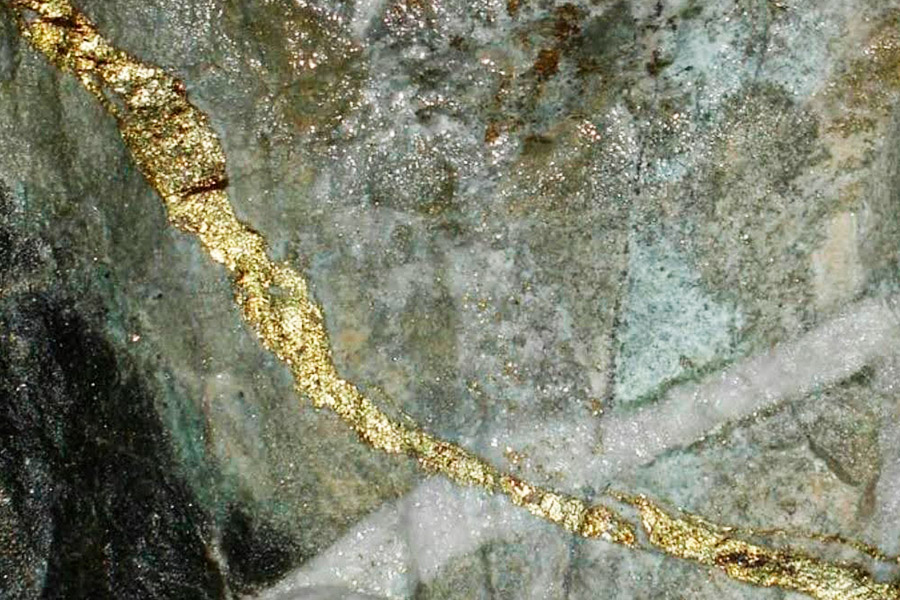
The discovery took place in a mountainous area, known for old stories of prospecting and artisanal mining. Using an FG80 long-range metal detector, the operator began scanning in search of deep and continuous signals, characteristic of natural mineralization.
The FG80 started indicating a broad and persistent signal, different from isolated objects. Following the direction pointed out by the equipment, the target narrowed down to a partially exposed rocky outcrop, where the soil was shallow and quartz appeared on the surface.
After removing some loose stones, a quartz-rich rock crossed by golden metallic veins emerged, shining in the sunlight. The thin, irregular bands contrasted with the whitish quartz, revealing a typical pattern of hydrothermal veins, formed when mineral-rich fluids filled rock fractures over thousands of years.
The appearance of the metal suggested a strong possibility of native gold, although the visual similarity to sulfides such as pyrite requires technical analysis for confirmation. Even so, the set drew attention due to the intense shine and continuity of the veins, a classic sign of gold mineralization.
Thanks to the directional sensitivity of the FG80, that rock ceased to be just part of the landscape and became a possible indication of geological wealth. A find that speaks not only of material value, but of the Earth’s own mineral history, written in golden veins within quartz.
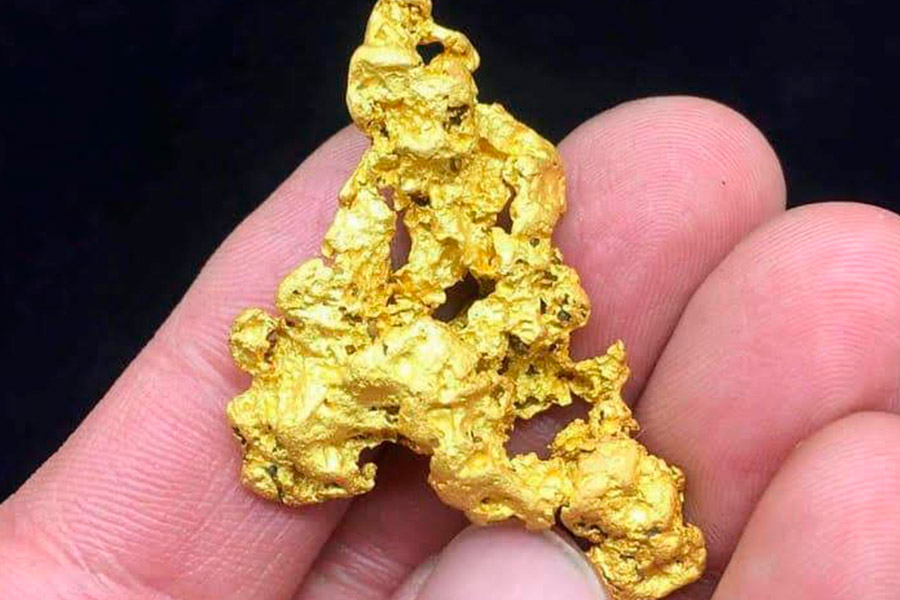
The discovery occurred along the banks of an ancient riverbed, known in the region for old accounts of artisanal prospecting. Using a DIAS2005 metal detector, the operator began scanning with a focus on natural and deep signals, typical of yet-unexplored gold deposits.
After a few minutes, the equipment indicated a firm and constant signal, different from common metals. Following the direction indicated by the DIAS2005, the target concentrated in an area of gravel mixed with coarse sand — a classic alluvial deposit environment. Excavation was carried out carefully, removing layers of moist soil until something caught attention with its unusual shine.
Among the stones, a natural gold nugget appeared, with an irregular shape, rough texture, and intense yellow coloration, intact and without any signs of oxidation. The metallic shine was evident even before cleaning, confirming it to be native gold, exactly as nature formed it over thousands of years.
Based on its size and appearance, the nugget likely broke away from a source rock and was slowly transported by water over time, eventually settling at that point in the terrain. Remaining there in silence for centuries, it awaited the right moment to be found.
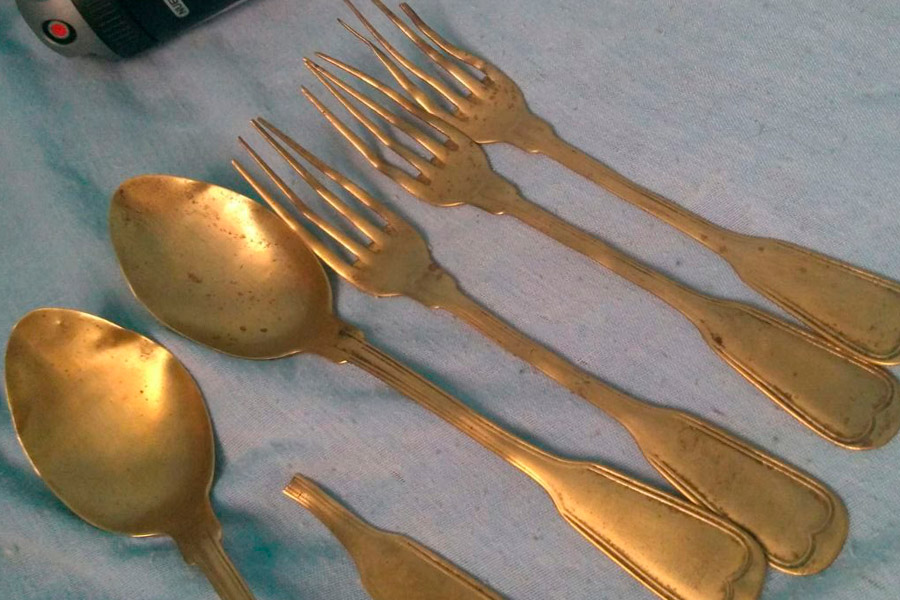
The cutlery came to light during a calm scan with an FG80 metal detector, on an old plot of land behind a rural house that had long been abandoned.
The signal appeared weak but constant — typical of old metal buried for a long time. Adjusting the direction indicated by the FG80, the target narrowed near a century-old mango tree. At about 30 centimeters deep, the shovel revealed a small wooden box almost destroyed by soil moisture.
Inside were two spoons and three forks, made of gold, covered with stains and marks of time. The golden shine was no longer intense, but still revealed that these cutlery pieces once belonged to a respectable table, perhaps in the late 19th century or early 20th century.
It is believed that the set was buried in haste, possibly to protect it during a period of relocation, crisis, or even fear of theft — something common in ancient times. Over the years, the story was lost, but the metal remained there, silent, waiting for the right moment to be rediscovered.
Thanks to the directional accuracy of the FG80, the cutlery ceased to be merely forgotten objects in the ground and returned to the light as small relics of the past, bearing marks of use, mystery, and memory.
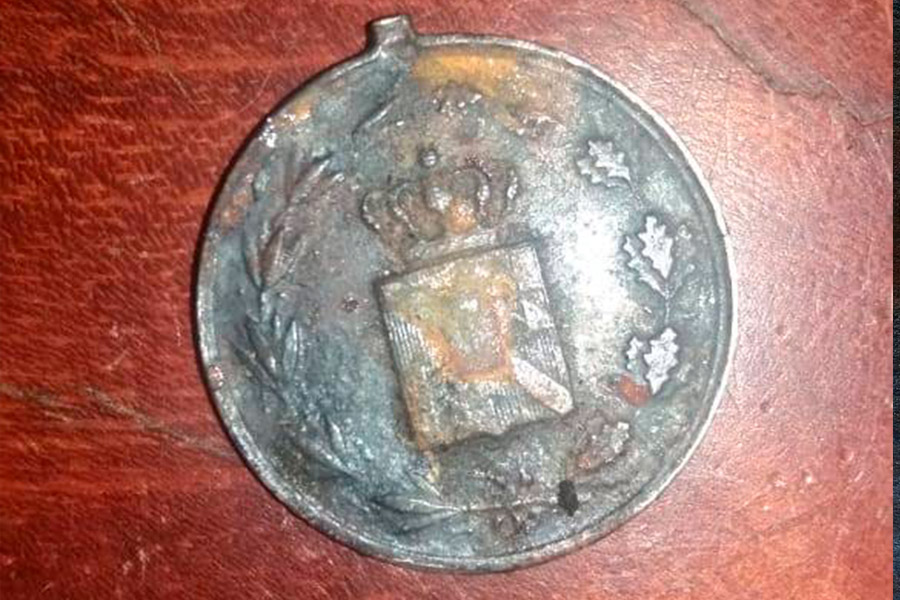
The discovery took place in an old field, known in the region for having been a transit route during the colonial period. Using an FG90 long-range metal detector, the operator began scanning early in the morning, when a firm and well-defined signal appeared ahead, indicating an ancient metallic target.
Following the direction indicated by the FG90, the target gradually narrowed until reaching a small rise in the terrain, near what remained of an old troop path. Digging carefully, just a few centimeters below the surface, a circular piece darkened by time emerged, covered with soil and oxidation.
After initial cleaning, an ancient medal or coin was revealed, quite worn, with a small upper ring — a clear sign that it was used as a pendant. In the center, it was still possible to distinguish a crowned heraldic shield, flanked by branches, classic symbols of honor, merit, and connection to the monarchy.
Based on the style of the coat of arms and the metal oxidation, everything points to a European origin, possibly Portuguese or Spanish, dating between the 18th and 19th centuries. The piece may have been a commemorative medal, an honorific object, or even a coin adapted for personal use, worn close to the body as a symbol of faith, status, or remembrance.
Thanks to the precision of the FG90, this relic returned to the surface after centuries buried, bringing with it a silent fragment of history — marked by time, yet still full of meaning and mystery.
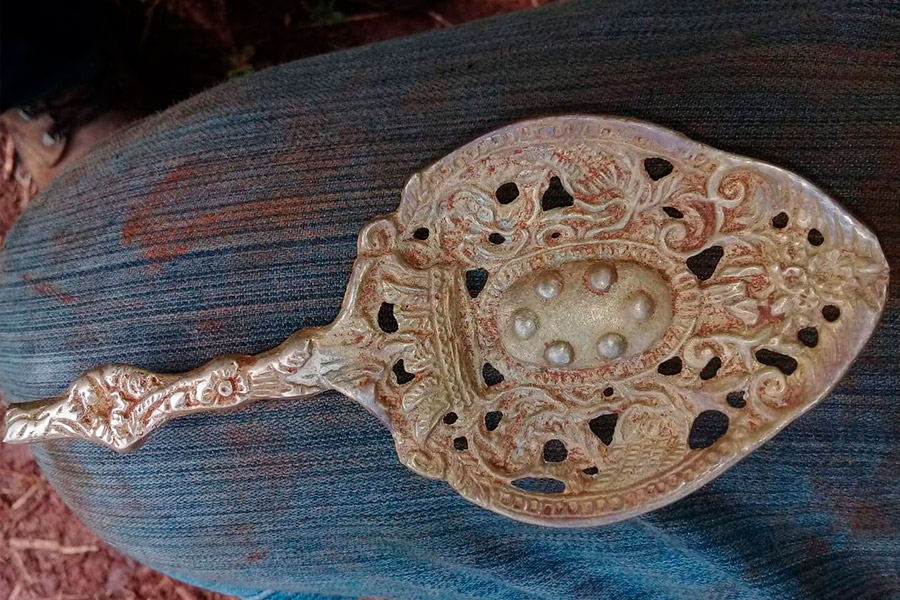
The discovery occurred on an old urban lot, where historical records indicated the existence of an elegant house demolished in the early 20th century. Using a DC2008 long-range metal detector, the operator began scanning in search of older and deeper metallic signals.
The DC2008 indicated a firm and stable target, typical of objects made from ancient metal alloys. Following the direction indicated by the equipment, the target narrowed to an area near what would have been the residence’s former garden. Excavation was done carefully, and just a few centimeters below the soil, an oval piece emerged, covered with compacted earth and bearing a grayish patina.
After initial cleaning, an antique silver hand mirror was revealed, with rich relief work, arabesques, and floral motifs. The oval center, where the mirror originally was, was already missing, but the finish and decorated handle revealed a refined personal-use object, typical of the late 19th century or early 20th century.
The piece likely belonged to a resident of the old house — part of a vanity set used on dressing tables, a symbol of elegance and personal care of the era. Over time, renovations, abandonment, or demolition of the property caused the object to be lost and buried, remaining forgotten for decades.
Thanks to the directional precision of the DC2008, this piece returned to the light, not as a simple buried metal object, but as a true fragment of history, carrying the charm, delicacy, and style of a time when even everyday items were conceived as works of art.
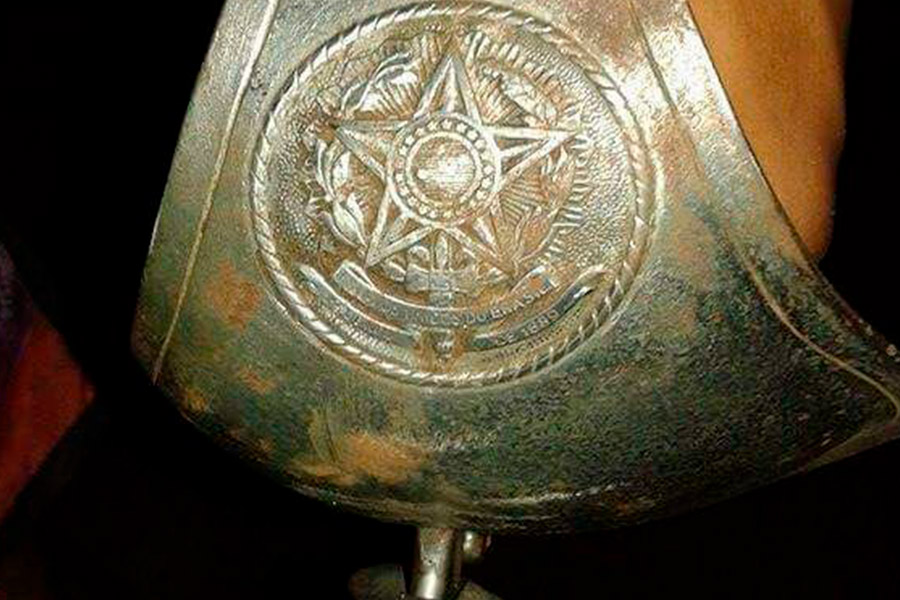
The discovery occurred in an area near an old military route, heavily used during the period of the Brazilian Empire. Using an FG80 long-range metal detector, the operator began scanning in search of deep and well-defined signals, characteristic of historical metallic objects.
The FG80 indicated a strong and continuous signal, pointing to a large target buried for a long time. Following the direction indicated by the equipment, the target led to a small rise in the terrain. As excavation began, the end of a metal scabbard emerged, still intact despite oxidation caused by years underground.
Carefully, the piece was fully removed, revealing a short sword or ancient saber, with a shell-shaped guard and a steel blade. On the scabbard and the guard, it was still possible to clearly identify the Coat of Arms of Brazil, a symbol of authority, sovereignty, and official service to the State.
This detail indicates that the sword belonged to a Brazilian officer, possibly linked to military forces, the imperial guard, or ceremonial service between the 19th century and the beginning of the Republic. At the time, weapons like this were not only instruments of defense, but also symbols of rank, honor, and commitment to the nation.
It is believed that the saber was lost during military movements, barracks changes, or even intentionally buried for protection during times of political instability. Over the years, the history faded, but the metal remained, preserving its significance.
Thanks to the directional precision of the FG80, this relic returned to the surface complete, accompanied by its original scabbard — a rare find that carries not only historical and collectible value, but also a strong link to Brazil’s military history.
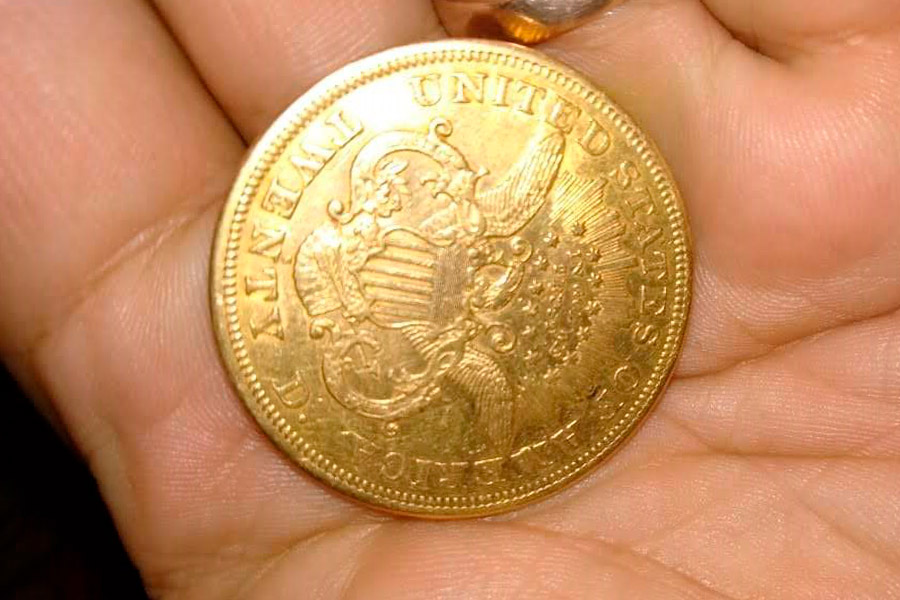
The discovery occurred in an open area, near the route of an old commercial road used in the late 19th century. Using an FG90 long-range metal detector, the operator began scanning in search of deep and precise signals, typical of noble metals buried long ago.
After a few minutes, the FG90 indicated a strong, clean, and stable signal — a common characteristic of gold, which does not suffer magnetic interference like other metals. Following the direction indicated by the equipment, the target narrowed to a small depression in the terrain, covered by low vegetation.
The excavation was carried out with extreme care. At about 40 centimeters deep, a golden coin emerged, still bearing a soft shine despite the years underground. After initial cleaning, it was clearly revealed as a US$20 Liberty Head Double Eagle, minted between 1850 and 1907, with the classic details engraved by James B. Longacre still well preserved.
Everything indicates that the coin was lost or intentionally buried during a period of intense gold circulation, possibly linked to trade, travel, or personal reserves from the era of the American gold standard, shortly after the California Gold Rush. At that time, a single Double Eagle represented a true fortune.
Thanks to the precision of the HC300, this relic returned to the surface intact, carrying not only its high gold value, but also powerful historical symbolism — a silent witness to the economic expansion and wealth that shaped the United States in the 19th century.
