DIAS2005 Mineoro – The Right Tracker for Those Who Think BIG!
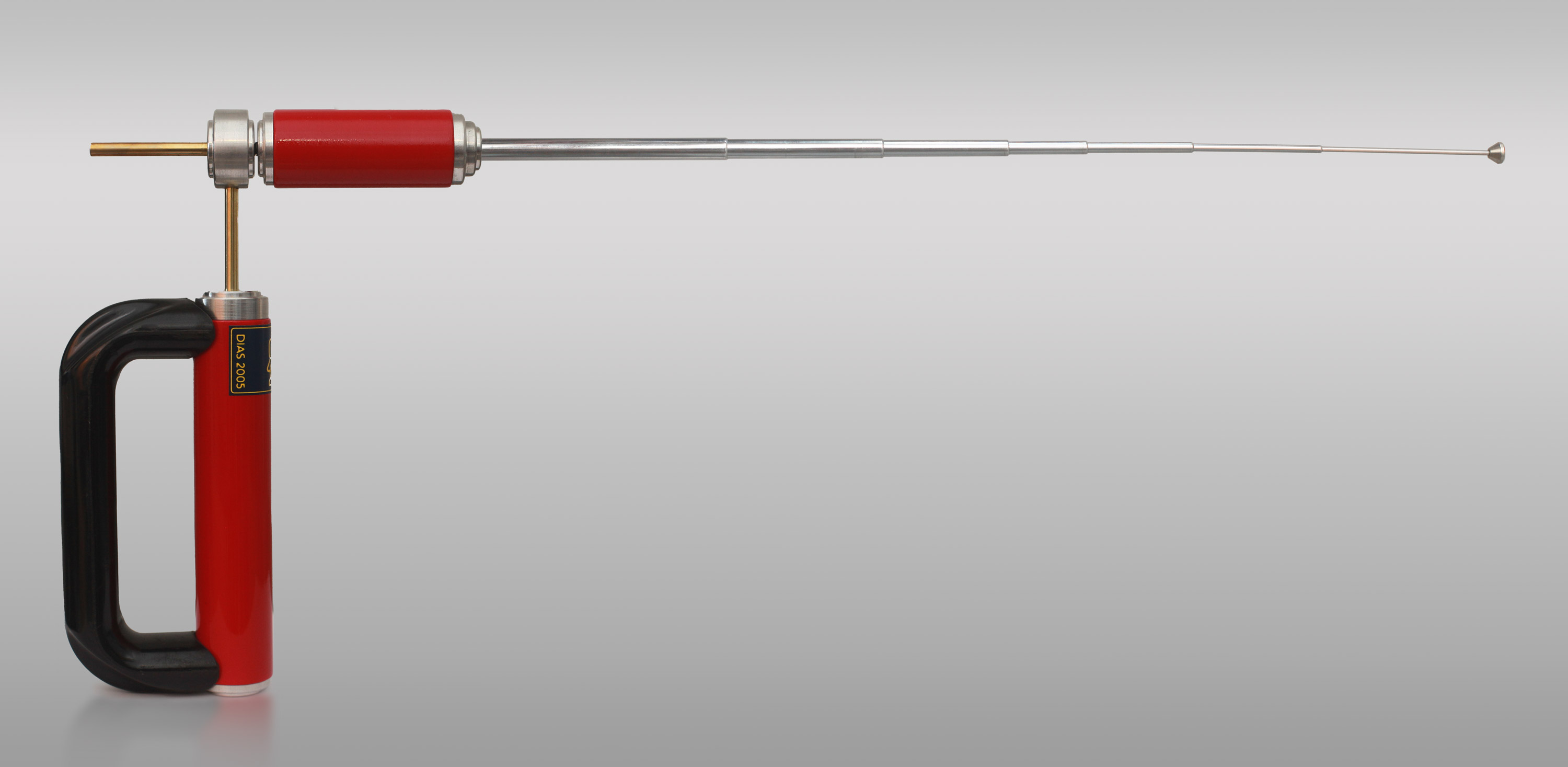
If you are the type who doesn’t waste time digging aimlessly and enjoys exploring large areas in search of ancient treasures, forgotten deposits, or metal caches buried for decades… the DIAS2005 could be the ideal partner for your next expedition.
The DIAS2005 is a long-range detector from Mineoro, designed for those seeking more than just lost coins. It works on the ionic / electrostatic principle, tracking substances and metals buried or hidden in the ground.
In practice?
It doesn’t “beep” for every little thing.
It helps to direct your search to where something truly significant may be hidden.
According to the manufacturer and resellers, the DIAS2005 can be used to locate:
🟡 Gold
⚪ Silver
🟤 Copper
💠 Precious and semi-precious stones (diamond, emerald, amethyst, topaz…)
🌊 Water
☠️ Mercury
And other non-ferrous minerals
In other words: this is equipment designed for exploration, not just curiosity.
✔️ Extremely lightweight – only ~200g (0.44 lb)
✔️ Truly portable – fits in a backpack without weighing you down
✔️ Ideal for long walks and remote areas
✔️ Suitable for ancient deposits, caches, and large buried volumes
✔️ Works with a sample of the substance, helping to filter what you want to find
It even comes with a manual and official Mineoro video, showing its use with targets buried for around 20 years. That already says a lot about the equipment’s purpose.
Some sources talk about huge ranges, even kilometers – but let’s be honest with you 👇
In practice, range and depth depend A LOT on:
Size and volume of the target
Type of material
Soil conditions
Proper use of the sample
For large deposits, old veins, or metal masses, it can make sense.
For small or recent objects, traditional coil detectors are still ideal.
There are reports of detections starting from 20 meters (65.6 feet) (small amounts of material), and exceeding 100 meters (328 feet) for large quantities of material.
Here, it’s a tool for those who know what they are looking for.
✅ Explorers of large areas
✅ Seekers of ancient deposits and caches
✅ Those needing total mobility
✅ Experienced treasure hunters who use the detector as a search guide
It is not recommended if you only want to find a lost coin in the yard or a recent jewel on the beach.
The DIAS2005 is not a toy.
It is equipment aimed at those who think big, explore far, and understand that ionic technology is meant to guide, not promise miracles.
If you enjoy adventure, unexplored terrain, and the possibility of finding something unseen for decades…
the DIAS2005 could be your next field ally.
Exploration isn’t luck. It’s strategy.
1 - What is the DIAS2005?
The DIAS2005 is a long-range detector from Mineoro, developed for exploration and search direction in large areas. It uses the ionic / electrostatic principle to assist in identifying zones with potential presence of specific substances.
2 - Does the DIAS2005 “beep” like a common detector?
No. The DIAS2005 has no sound signal and no search coil. It works as a tracker, helping the operator to guide the search, not as a conventional point-to-point detector.
3 - What materials can be searched with the DIAS2005?
The equipment can be used for the exploration of:
- Gold
- Silver
- Copper
- Precious and semi-precious stones
- Water
- Mercury
- Other non-ferrous minerals
Results may vary depending on soil conditions and user experience.
4 - Does the DIAS2005 come with samples?
Yes. The DIAS2005 is supplied with 3 standard samples:
- Gold
- Silver
- Copper
These samples allow immediate use of the equipment.
5 - Can I search for other materials besides these?
Yes. The equipment can be used to search for other materials; however, additional samples are not included and must be purchased separately.
6 - Which samples are NOT included with the equipment?
Not included, for example:
- Precious and semi-precious stones
- Water
- Mercury
- Other specific minerals
These samples must be provided by the user.
7 - Is the use of samples mandatory?
Yes. The use of samples is part of the operating principle of the DIAS2005 and helps with filtering and directing the search.
8 - Can I use the equipment without a sample?
It is not recommended. For better performance and correct readings, the use of the corresponding sample for the desired material is advised.
9 - Does the equipment guarantee finding gold or treasure?
The DIAS2005 is an exploration support tool, and results depend on natural factors and the operator’s skill.
10 - What is the range or depth of the DIAS2005?
There are reports of detections starting from approximately 20 meters, and in cases of large material masses, exceeding 100 meters. Performance varies according to soil conditions, target volume, sample usage, and operator experience.
11 - Does it work on any type of soil?
It can be used on various types of soil; however, performance may vary depending on mineralization, moisture, and natural characteristics of the region.
12 - Is it suitable for beginners?
The DIAS2005 is more suitable for users with some exploration experience or those willing to learn prospecting techniques. It is not an automatic or plug-and-play device.
13 - Can it be used for small or recently buried objects?
It is not the most suitable equipment. For coins, recent jewelry, or small targets, traditional coil detectors are usually more appropriate.
14 - Is the equipment portable?
Yes. The DIAS2005 is extremely lightweight (approx. 200 g) and easy to carry, ideal for long walks and remote areas.
15 - Is it necessary to use a sample of the substance?
Yes. Using a sample of the desired material helps filter the search and is part of the equipment’s operating principle.
16 - Is the product new and does it have a warranty?
Yes. New, original Mineoro product, with a 1-year manufacturer’s warranty.
17 - Is Mineoro a reliable brand?
Yes. Mineoro has been operating since 1954 and is internationally recognized in the detector and tracker segment.
18 - Is shipping available worldwide?
Yes. Shipping is carried out via Correios and DHL courier service, with a tracking number provided after dispatch.