
If you are the type who enjoys exploring ancient sites, buried histories, and the real possibility of finding gold, the HC300 from Mineoro could be exactly the partner missing from your searches.
The HC300 is a long-range directional detector, specially designed for treasure hunters. It’s not a common beach or backyard detector — the purpose here is different: to locate ancient metals at depth, mainly gold buried for many years.
Read more important information
Ionic directional technology
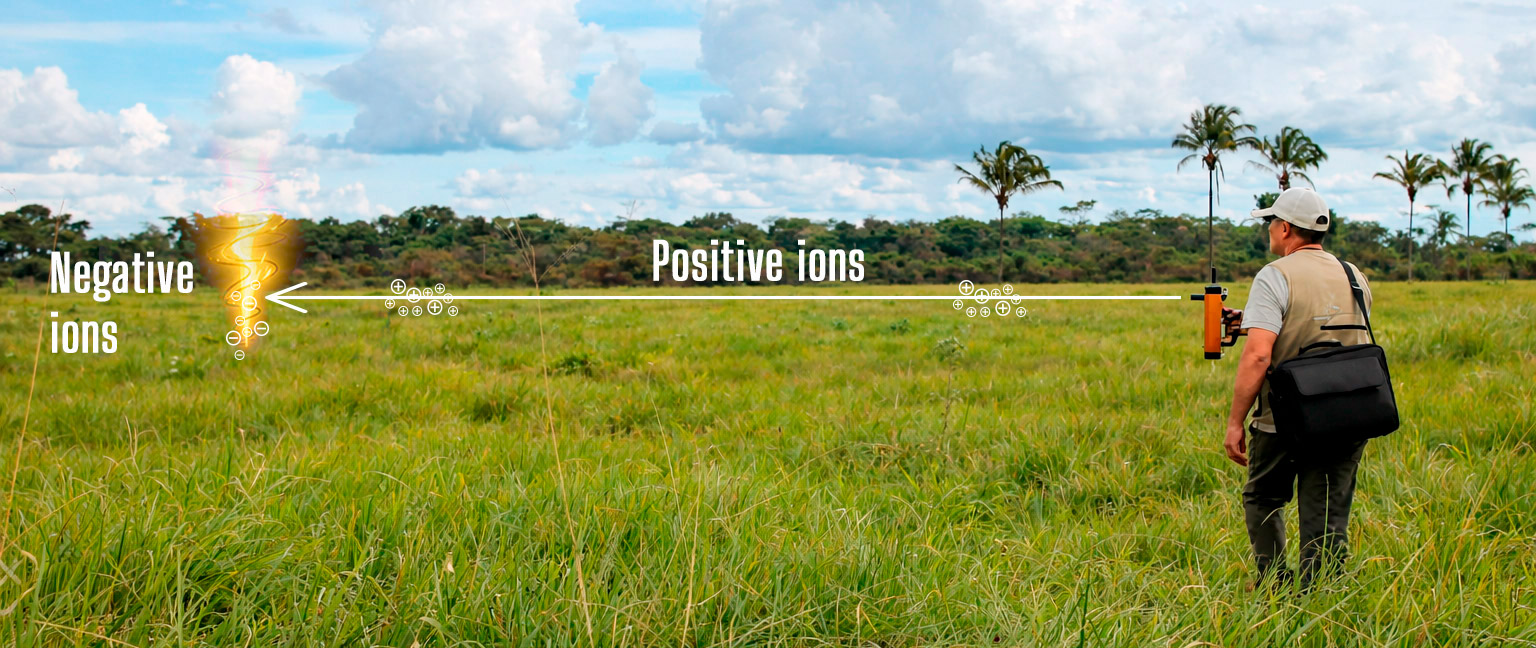
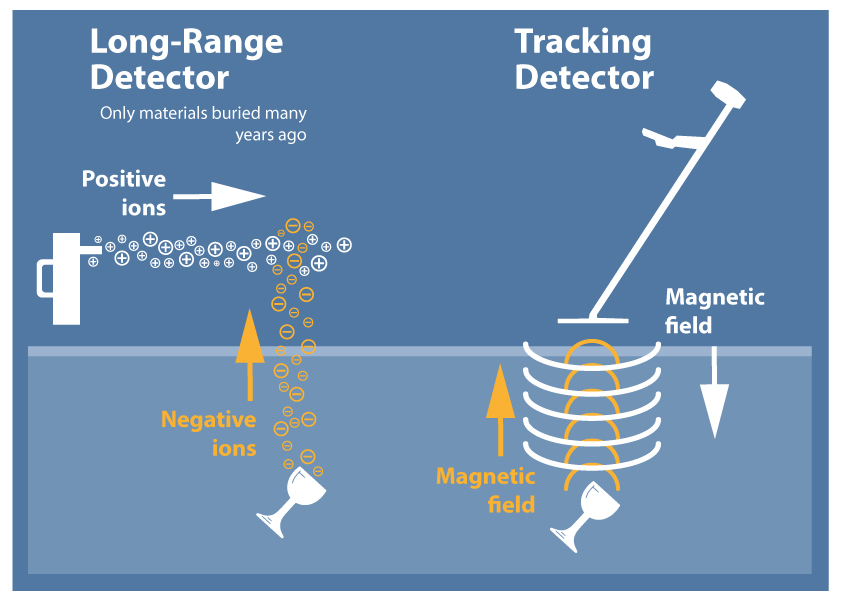
Unlike traditional coil detectors, the HC300 works with ionic/electrostatic classification, ideal for those seeking ancient treasures that have already created an “ionic field” in the soil over time.
Focus on gold
The HC300 is classified as a directional gold detector, suitable for finding everything from ancient coins and rings to large metallic deposits buried for decades.
Easy to use (great for beginners)
Mineoro itself describes the HC300 as a model ideal for those starting in the world of directional detectors. No complicated menus or endless adjustments — just turn on, point, and search.
Light, portable, and expedition-ready
Weighing about 1.5 kg (3.31 lb - pounds), it can be easily carried on trails, historic sites, rural areas, or lightly explored regions.
Complete kit
You’ll be fully equipped:
Carrying case
Stand support
Measuring tape
Center & Deep device (to help identify the target’s center and depth)
Manual
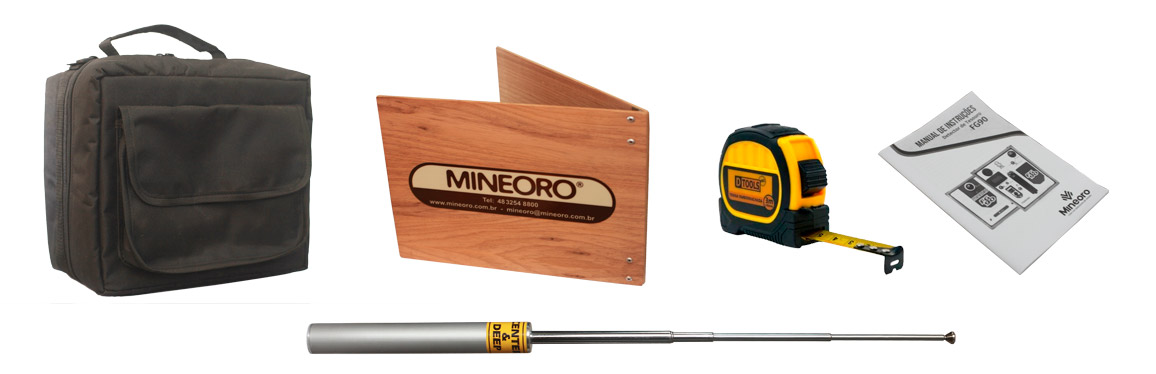
Everything designed to make life easier even before digging starts.
Model:
Long-range directional substance detector
Detection system:
Ionic directional classifier
Ionic / electrostatic field
Detection distance:
From a few centimeters up to 700m (0.43 miles), depending on the size of the material and being buried for more than 10 years
Depth:
From a few centimeters up to 20 meters (65.6 feet) or more
Power supply:
12 AA 1.5V batteries (alkaline)
01 9V battery (alkaline)
Dimensions:
Width: 5.5 cm (2.17 inches)
Length: 23 cm (9.06 inches)
Height: 26 cm (10.24 inches)
Weight:
1.5 kg (3.31 lb - pounds)
Warranty:
1-year warranty against manufacturing defects, starting from the invoice date.
Metals it detects:
✔ Natural gold
✔ Gold objects
✔ Occasionally silver and copper
The HC300 truly shines when used in the right scenario:
✅ Ancient and little-disturbed grounds
✅ Areas with a history of old occupation
✅ Searches for objects buried many years ago
✅ Exploration of large areas where a common detector would take much longer
This is the type of equipment for those who think big and seek beyond the superficial.
The HC300 is not recommended if you want to:
❌ Find recently lost objects
❌ Work in areas heavily disturbed by machinery
❌ Perform fine metal discrimination like a coil detector
It also does not replace traditional detectors for shallow or urban searches. These are different technologies with different objectives.
✔️ Those wanting to enter the world of directional detectors
✔️ Treasure hunters seeking gold and ancient metals
✔️ Explorers of historic sites and preserved grounds
✔️ Those who understand that long-range is strategy, not magic
The HC300 Mineoro is a solid entry point for those dreaming big in treasure detection. If you know where to search, have patience, curiosity, and an explorer’s spirit, this detector could be the beginning of incredible stories — and perhaps, a major find.
Treasure doesn’t appear for those who search shallow. It appears for those who know where and how to look.
1 – Does it really work to find gold?
Yes. It is designed for natural gold prospecting, veins, and ancient targets. Results depend on the operator’s knowledge, soil type, and target size.
2 – Does the HC300 detect natural gold veins?
Yes. It is intended to locate ancient natural gold veins that remain stable in the ground for long periods and generate a broad and stable ionic field.
3 – Can the HC300 detect alluvial gold (alluvial deposits)?
Yes, as long as they are old and stabilized deposits, such as auriferous gravels and ancient riverbeds.
4 – Does it detect recent gold or gold recently moved by water?
That is not its focus. Recent gold or freshly disturbed soil usually does not generate enough ionic field for long-distance measurements.
5 – Does the HC300 detect small nuggets?
Isolated and recent nuggets may not generate a significant response. Best performance occurs in natural concentrations, veins, or ancient deposits.
6 – Does the HC300 detect iron or metallic trash?
The equipment is mainly focused on gold and, occasionally, silver and copper. Common ferrous objects and recent metallic trash usually do not produce a significant response.
7 – Does the FG80 detect recent or surface metals?
That is not its focus. Recent or surface objects usually do not generate a sufficient ionic field, helping to reduce false signals.
8 – The older the target, the better the result?
Yes. Targets buried for many years tend to generate a more stable ionic field, improving the equipment’s response.
9 – Why does buried time influence detection?
Over time, metal undergoes oxidation and corrosion, releasing ions into the soil and forming an ionic cloud that increases as the years pass.
10 – How long does gold need to be buried to generate a detectable ionic field?
The process begins within hours or days, but after approximately 10 to 20 years, the ionic field is usually sufficient for long-distance measurements.
11 – How does the HC300 “see” the target without using a coil?
It does not use a VLF coil. It works with ionic directional classification, capturing variations in the ionic/electrostatic field of ancient targets.
12 – What does directional detection mean in practice?
The equipment indicates the direction of the target, allowing you to gradually close in on the point without scanning the ground meter by meter.
13 – Does it indicate the exact point to dig?
It indicates direction and area. For greater accuracy, the kit includes the Center & Deep meter, which helps with target centering and depth estimation.
14 – What is the maximum depth it can reach?
It depends on the target, soil conditions, and settings. It was developed to locate deep targets that common detectors cannot reach.
15 – Does it work better than traditional coil detectors?
They are complementary technologies. The HC300 locates and directs ancient, deep targets; coil detectors help with confirmation.
16 – Other detectors claim long-range capability. What is the difference?
Common detectors are more efficient with surface objects. The FG80 is focused on deep and ancient targets, with directional detection.
17 – Does the HC300 replace a common detector?
No. It complements it. It is ideal for large areas and deep targets, while common detectors assist with confirmation.
18 – Is it easy to use?
Designed for professionals. Operation is practical but requires technique and experience for best results.
19 – Is it suitable for beginners?
It can be used by beginners, but the best results come with study, practice, and reading the manual.
20 – Does the HC300 need to be calibrated before use?
Yes. Proper calibration is essential. The product includes a manual and an official calibration video.
21 – Do I need extra accessories to use it?
No. The kit is complete: HC300, case, support, Center & Deep meter, manual, and calibration video.
22 – Is it recommended to use another detector together with the HC300?
Yes. Professionals use the HC300 to direct the target and confirm it with a coil detector or probing.
23 – Does it work on any type of terrain?
It was developed for common mineralized soils. Recently disturbed soils may reduce performance.
24 – Does it suffer from electrical interference?
It may experience interference in areas with high-voltage power lines or urban environments.
25 – Does it work on mountainous or uneven terrain?
Yes. It is lightweight, portable, and does not depend on constant ground contact.
26 – Do weather or humidity affect its operation?
Normal conditions do not prevent use. Waterlogged or recently disturbed soils may reduce signal quality.
27 – Is performance the same in any region?
Results vary according to soil type, area history, and operator experience.
28 – Why choose the HC300 Mineoro instead of another detector?
Developed for professional gold prospectors, with ionic directional technology, national manufacturing, and local technical support.
29 – Why pay more than for cheaper detectors?
The price reflects a professional, durable piece of equipment with technical support and warranty.
30 – Does the product come with a warranty?
Yes. One-year manufacturer’s warranty with technical support. New and original product.
31 – How long does delivery take?
Shipping occurs after payment confirmation, via postal service or carrier. Delivery time varies by address and can be simulated before purchase.
32 – Does the HC300 guarantee finding gold?
There is no guarantee of discoveries. The HC300 is a prospecting tool, and results depend on the area’s history, soil type, buried time of the target, and operator experience.







